
Add Row
Add Element
cropper
update


update
Add Element
  • Home
  • Categories
    • Real Estate
    • Influencer Corner
    • Startup News
    • Entrepreneurial Profiles
    • Small Business Resources
    • Daily Entrepreneurship News
    • Emerging Marketing Trends
    • Social Media Trends
Add Element
  • update
  • update
  • update
  • update
  • update
  • update
  • update
June 06.2025
2 Minutes Read

How AI Is Reshaping the B2B Buyer Journey for Smart Marketers

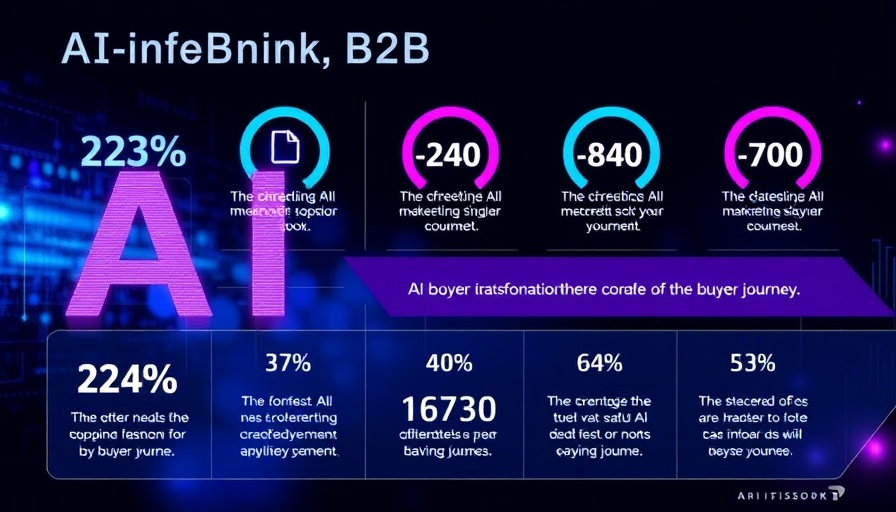
AI in B2B marketing infographic with statistics and transformation details.

The AI Revolution in B2B Marketing

Today’s B2B marketing landscape is undergoing a seismic shift, largely driven by the adoption of Artificial Intelligence (AI). While AI once felt distant, it’s now a dominant force influencing how business buyers discover, evaluate, and select their vendors. With Millennials and Gen Z constituting over two-thirds of B2B decision-makers, the need for agile, AI-informed strategies has never been more significant.

Understanding the New Buyer Journey

Research indicates that about 90% of B2B buyers are turning to AI tools, such as ChatGPT, for their vendor research. Surprisingly, 83% of their buying journey is spent conducting independent research. This shift calls for a re-examination of how businesses approach their marketing strategies.

Transforming Discovery in an AI-Driven World

Under the new paradigm, potential buyers no longer rely solely on traditional search engines. Instead, they expect AI assistants to deliver relevant information quickly. To ensure visibility, businesses must optimize their content for AI platforms non-traditionally. The surge of generative AI capabilities means that even small marketing teams can produce high-quality content rapidly, significantly enhancing their online presence.

Creating Authentic Engagement

To rise above the digital noise, marketers should leverage AI to personalize the buyer's journey. Tailored content experiences can make interactions feel bespoke, rather than generic ads. Using AI-driven chatbots can help businesses provide real-time responses to inquiries, thus fostering deeper customer engagement.

Enduring Value Through AI

As AI continues to evolve, its capacity to help businesses create value-rich experiences offers profound benefits. By weaving AI seamlessly into their strategies, marketers can not only enhance visibility and engagement but also build long-lasting relationships based on trust and satisfaction.

For businesses, adapting marketing techniques to integrate AI insights may seem challenging, but it’s also an opportunity. The first step? Understanding how to leverage these advancements effectively.

Ready to elevate your investment journey? Learn how to invest smarter with our free information, no obligation.

Emerging Marketing Trends

Write A Comment

*
*
Related Posts All Posts
12.12.2025

Why Every Business Must Embrace a Marketing Operating System for Success

Update Understanding the Need for a Marketing Operating System In today’s rapidly changing business landscape, a cohesive Marketing Operating System (MOS) is more crucial than ever for achieving sustainable growth and operational effectiveness. As John Jantsch emphasizes in his recent discussion, successful marketing goes beyond the mere execution of campaigns; it necessitates a comprehensive, strategic framework. Just like accounting or payroll, marketing deserves a systematic approach that aligns all components of business strategy, brand development, team execution, and customer experience under one seamless umbrella. The Marketing Pyramid: A Innovative Framework At the heart of Jantsch’s concept is the Marketing Pyramid, which acts as the backbone for crafting a successful marketing system. The pyramid consists of business, brand, growth, experience, tech, and team strategies that must work in harmony. This model ensures that each marketing initiative is not a scattered effort, but instead interwoven with the overall business objectives. Businesses that implement this strategic pyramid can expect to see meaningful engagement and measurable outcomes, rapidly steering their marketing from chaotic randomness to systematic effectiveness. Navigating the Seven Stages of Implementation Implementing a Marketing Operating System involves seven crucial stages that guide a company from concept to execution. These stages include: Strategy First Core: Establishing a strong foundation based on business goals and the client's journey. Campaign Builder System: Planning integrated campaigns that work together for brand consistency. Workstream Engine: Designing standard operating procedures (SOPs) and team roles for effective execution. AI-Powered Marketing Hub: Leveraging AI to enhance marketing workflows and deliver relevant content. Scorecards and Signals: Creating performance dashboards to track marketing effectiveness. Momentum Meetings: Frequent collaboration sessions to ensure alignment and accountability. Optimization Loop: Continuous adaptability based on feedback and data. Together, these stages create a robust marketing framework that can adapt to market shifts and consumer demands. The Rationale for Systematic Marketing Isolated marketing tactics can no longer create the momentum needed for growth. Because consumer expectations are on the rise and technology continues to disrupt traditional frameworks, a reactive approach will leave companies behind. By establishing a structured model like the MOS, companies can integrate their marketing systems—aligning them with the evolving landscape while ensuring clarity and consistency. Ready for Change? Take Action Today If you're ready to move beyond disjointed marketing efforts and explore how to implement a robust Marketing Operating System, consider this: Investing in a systematic approach not only enhances accountability and visibility but also stimulates exponential growth. Start by exploring opportunities to integrate AI into your workflows for a more effective marketing strategy. Learn How to Invest Smarter — Free Info, No Obligation, Nationwide Support.

12.11.2025

Why Great Employees Struggle as Managers: Essential Skills for Success

Update Understanding the Gap: Why Great Employees Often Struggle as Managers In the competitive arena of business, it’s common to elevate high-performing employees into management roles. However, this approach can backfire, as many find that great individual contributors don’t necessarily make effective managers. Ashley Herd, founder of Manager Method and former head of HR at McKinsey, highlights crucial flaws in this method. Often, employees are promoted without any formal leadership training, resulting in a lack of essential management skills, empathy, and clear communication. The Reality of 'Accidental Managers' As discussed in the Duct Tape Marketing Podcast with John Jantsch, many managers become leaders by accident, often due to their strong individual contributions rather than their leadership capabilities. These "accidental managers" typically receive no guidance on how to handle team dynamics, which can lead to burnout for both them and their teams. According to Herd, clear expectations should not just be a list of goals; they should involve ongoing conversations about personal roles and impacts. Essential Managerial Skills and Development Strategies To facilitate better leadership, aspiring managers should hone specific skills. Surveys indicate that effective communication, emotional intelligence, and conflict resolution are paramount. Tools such as the “Pause → Consider → Act” feedback method can ensure that communication remains empathetic rather than ego-driven. Additionally, regular one-on-one meetings can help managers connect with team members, address challenges, and encourage growth. The Power of Empowerment and Delegation Herd emphasizes the importance of adopting a coaching mentality instead of a commanding one. By empowering teams to take on responsibilities, managers not only reduce their workload but also foster development and trust among their employees. Recognizing individual strengths and positioning tasks accordingly can significantly enhance team performance and morale. Conclusion: Making the Transition from Employee to Effective Manager Understanding the common pitfall of promoting employees to management roles without adequate training is vital for organizations. Investing in leadership development through courses, workshops, or coaching can be transformative. As the professional landscape continues to evolve, effective management becomes increasingly critical in nurturing both employee well-being and organizational success. Take the first step towards enhancing your management skills today; explore personalized leadership development options!

12.11.2025

Transform Your Business Growth with the Marketing Hourglass Framework

Update Rethinking Marketing Strategies with the Hourglass Framework For small business owners, navigating the complexities of marketing can often feel overwhelming, particularly with traditional strategies that emphasize a linear approach. The introduction of the Marketing Hourglass™ framework transforms this dynamic, providing a holistic model that adapts to contemporary consumer behaviors. Understanding the Shortcomings of Traditional Funnels Many traditional marketing strategies focus on a one-way funnel that guides customers from awareness to purchase. However, the reality of consumer behavior has evolved. Buyers today expect ongoing engagement and nurturing well beyond their initial purchase. Ignoring this fact can alienate customers, impacting repeat business and referrals significantly. The Power and Structure of the Marketing Hourglass™ The Marketing Hourglass™ consists of seven interconnected stages: Know, Like, Trust, Try, Buy, Repeat, and Refer. Each phase actively addresses a specific customer question, effectively guiding them along their journey. This model recognizes the importance of fostering relationships and provides a structured approach to ensure businesses remain relevant before and after transactions. Why This Framework Works Research indicates that existing customers offer a higher conversion rate—approximately 70%—compared to new prospects at around 20%. By directing efforts at retaining customers and encouraging referrals, businesses can significantly increase profitability. Moreover, the Referral stage of the Hourglass allows businesses to leverage satisfied customers as advocates. Real-World Application: A Case Study Consider the success story of Balance Dental Studio, which implemented the Marketing Hourglass™ framework to great effect. By recognizing the customer’s journey and actively addressing their experiences at each stage, they significantly enhanced client satisfaction and expanded their referral base. Practical Steps for Implementing the Hourglass Framework To apply the Marketing Hourglass™ in your own business, begin by auditing your existing customer engagement touchpoints and mapping the customer journey. Identify each stage and develop strategies to engage with your customers meaningfully. Utilize testimonials, offer free trials, or educational content that nurtures their journey. Pursuing these actionable insights can help you not only attract customers but also build lasting relationships that lead to growth and sustainability. Time to Embrace Change in Marketing! The shift from traditional funnels to a comprehensive hourglass approach reflects a modern understanding of consumer needs. Ready to evolve your marketing strategy? Learn how to invest smarter — free info, no obligation, nationwide support.

Terms of Service

Privacy Policy

Core Modal Title

Sorry, no results found

You Might Find These Articles Interesting

T
Please Check Your Email
We Will Be Following Up Shortly
*
*
*