
Add Row
Add Element
cropper
update


update
Add Element
  • Home
  • Categories
    • Real Estate
    • Influencer Corner
    • Startup News
    • Entrepreneurial Profiles
    • Small Business Resources
    • Daily Entrepreneurship News
    • Emerging Marketing Trends
    • Social Media Trends
Add Element
  • update
  • update
  • update
  • update
  • update
  • update
  • update
March 05.2025
2 Minutes Read

What Is the Fraud Triangle in Accounting? Understanding Fraud Prevention

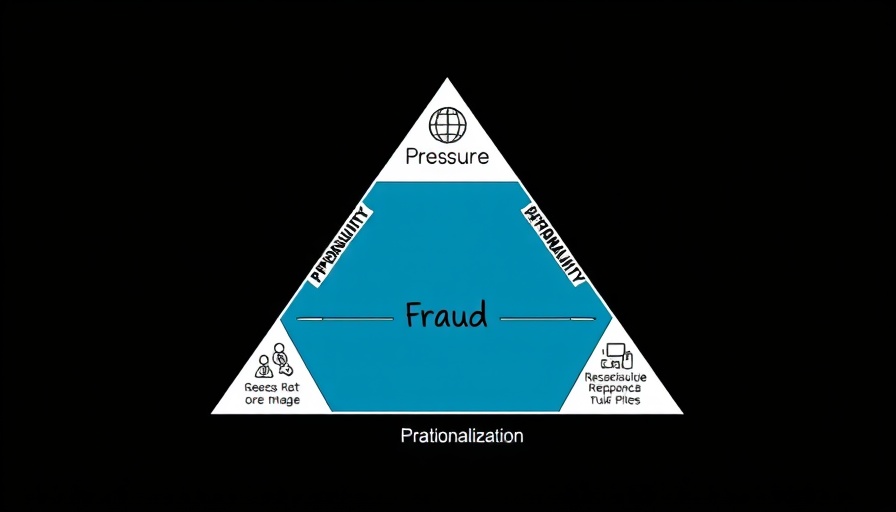
Illustrated fraud triangle chart with pressure, opportunity, rationalization.

Understanding the Fraud Triangle: A Crucial Framework for Small Businesses

The fraud triangle is a critical tool that small business owners must understand to safeguard their enterprises from occupational fraud. Developed by criminologist Donald R. Cressey, this framework identifies three essential components—pressure, opportunity, and rationalization—that together create a fertile ground for fraud to occur within organizations.

Pressure: The Incentive Behind Fraud

At the heart of the fraud triangle is pressure, which encompasses the financial or emotional motives that might push a trusted employee towards committing fraud. Common pressures include financial emergencies, lifestyle affluence, or even workplace frustrations. For instance, an employee facing unexpected medical expenses may feel tempted to embezzle funds to alleviate stress. Recognizing these pressures is fundamental in creating preventive measures for fraud.

Opportunity: Control What You Can

Unlike pressure and rationalization, opportunity is an element that business owners can significantly control. This component refers to the ability employees have to perpetrate fraud without getting caught. Weak internal controls, lack of supervision, and inadequate oversight create openings for fraud. Business owners can mitigate these risks by implementing robust checks and balances, such as separation of duties and regular audits—a proactive stance that can deter potential fraudsters.

Rationalization: How Employees Justify Their Actions

The third leg of the fraud triangle, rationalization, pertains to the internal justifications employees make for their dishonest actions. For many, committing fraud can be rationalized through thoughts like, ‘I deserve this’ or ‘they won't miss that money.’ By fostering a transparent work environment with clear ethical guidelines, business owners can diminish these justifications, ensuring that employees understand their accountability within the organization.

Implementing Effective Fraud Prevention Strategies

Awareness of the fraud triangle's components can empower small business owners to develop an effective fraud prevention plan. It's essential to establish a culture of open communication, empathy, and realistic performance expectations that decrease the likelihood of fraud. Strategies may include offering employee assistance programs, integrating strong internal controls, and creating a supportive workplace atmosphere that discourages the feeling of isolation.

Your Action Plan Against Fraud

Recognizing the influences behind occupational fraud is paramount, but taking actionable steps is what truly protects your business. Beyond understanding the fraud triangle, small business owners should actively engage with their employees, implement stringent controls, and foster a positive workplace culture. By doing so, they can prevent fraud before it begins, ensuring the integrity and long-term success of their organization.

Small Business Resources

Write A Comment

*
*
Related Posts All Posts
12.13.2025

Holiday Boost: Gas Prices Dip As Businesses Prep for Increased Spending

Update Gas Prices at an Unexpected Low As the holiday season draws near, small business owners across the United States are finding unexpected relief in falling gas prices. The national average dipped 5 cents to $2.94 per gallon, marking the lowest average in four years. This decline in prices not only means more savings for consumers but also presents a potential boon for small businesses reliant on transportation. Understanding the Impact of Lower Gas Prices With gas prices now below $3 for the first time since early December last year, small business owners have an opportunity to capitalize on increased consumer spending. The AAA emphasized that lower gas prices could stimulate additional travel, leading to higher foot traffic and sales in local businesses this holiday season. For instance, areas with historically high gas prices, such as Hawaii and California, are seeing averages of $4.44 and $4.41 respectively, while states like Oklahoma and Texas offer much lower rates at $2.36 and $2.51. Awareness of these regional variations can help small business owners adjust their pricing strategies accordingly. Market Trends and Consumer Behavior The decreased gas prices coincide with a notable uptick in gas demand—from 8.32 million barrels per day to 8.45 million. However, gasoline production has seen a recent downturn, averaging 9.6 million barrels per day. This combination of increased demand and reduced supply may suggest future price volatility. Thus, savvy small business owners should keep a close watch on oil market trends as holiday sales unfold. Making Smart Business Decisions To prepare for potential fluctuations in gas prices, businesses relying on transportation should consider diversifying their transportation methods and investing in more fuel-efficient technologies. The national average for EV charging stands at a respectable 38 cents per kilowatt-hour, providing another avenue for sustainable transportation options. As more consumers embrace electric vehicles, small business owners can leverage both the cost and marketing benefits of greener options. Capitalizing on Consumer Spending With the holiday season approaching and gas prices on the decline, the stage is set for small businesses to engage more effectively with consumers. Creating promotional campaigns around lower travel costs can lead to increased sales, and utilizing organic advertising strategies will be crucial. As consumers become more mobile, small businesses can attract new customers by promoting holiday specials and events. Ultimately, while reducing operational costs through lower gas prices presents an excellent opportunity for increased revenues, business owners must remain vigilant about the volatile oil market and continue adapting their strategies for success. To further support small businesses, resources like the AAA TripTik Travel planner can assist in navigating local gas price landscapes. Learn How to Invest Smarter — Free Info, No Obligation, Nationwide Support.

12.13.2025

From Pizza to Real Estate CEO: The Transformation of Andres Hoyos

Update From Pizza to Real Estate: An Unexpected JourneyAndres Hoyos’ rise from working in a pizza restaurant to becoming the CEO of a burgeoning indie brokerage is nothing short of inspiring. Arriving in the United States as a teenager in 2001, he took his first steps in the workforce delivering pizzas. Fast forward to today, he leads Sync Brokerage, known for its vibrant workplace culture and innovative approaches to real estate.The Indie Broker RevolutionHoyos believes that the future of the real estate industry is a consolidation into two categories: large traditional companies and boutique firms. He’s positioning Sync to thrive amidst this shift, anticipating closure of larger franchises that can’t sustain aggressive compensation models for agents. “We are witnessing a critical transformation,” he states, underlining his belief that boutique firms like Sync Brokerage are uniquely equipped to adapt and flourish in a changing market.Learning From SetbacksIt hasn’t all been a smooth ride for Hoyos. His experience with overleveraging at the end of 2022 serves as a lesson for many in the industry. Despite the challenges, including a dip in attention from investors, he emphasizes the importance of resilience and the support from his family in overcoming these hurdles. It’s an insight many professionals in real estate can appreciate as they navigate their own challenges.What’s Next for Real Estate?With predictions suggesting that 2026 could see a further divide in the industry, Hoyos' perspective puts him at the forefront of this conversation. There's a significant expectation for home prices to level while sales experience a modest rise. As the market evolves, agents are encouraged to adapt their strategies based on emerging trends—which could position innovative brokers as key players in shaping the future of real estate.Investing in KnowledgeTo succeed today, real estate professionals must be proactive learners. Andres advises upcoming agents to view real estate through the lens of investment—grasping financing methods and identifying wealth-building opportunities is essential. For those looking to enter the field or elevate their careers, seeking knowledge and grounding investments is the way forward.A Call to ActionAs the indie brokerage model continues to gain traction, real estate professionals must stay informed and adaptable. For those interested in making smarter investment decisions, whether in real estate or other ventures, it's crucial to engage and learn. Learn how to invest smarter with free information and no obligation today.

12.13.2025

Justice Department's Indictment Failure Against Letitia James Reflects Political Strife

Update Letitia James Triumphs as DOJ Misfires Again In a significant blow to the Trump administration's ongoing legal ambitions, a federal grand jury in Alexandria, Virginia, declined to indict New York Attorney General Letitia James for mortgage fraud. This rebuff marks the third failure by the Department of Justice (DOJ) to pursue charges against James, who has consistently been targeted by Trump due to her legal actions against him. The Context of the Case The charges against James stemmed from allegations that she made false claims regarding a mortgage application. However, recent decisions by grand juries indicate a lack of evidence or merit in these accusations. Previously, another grand jury in Norfolk had rejected the attempt to indict James, underscoring the defensible nature of her actions, and a prior case was dismissed due to procedural issues surrounding the appointment of U.S. Attorney Lindsey Halligan. Political Undertones Drive the Prosecution The DOJ's repeated failures highlight the politically charged atmosphere surrounding James's case. She has been one of several high-profile Democrats accused of mortgage fraud under referrals from Federal Housing Finance Agency (FHFA) Director Bill Pulte, who has been noted for his close ties to Trump. Critics argue that these prosecutions are not based on legitimate legal grounds but rather serve as a political vendetta against those opposing Trump. The Implications for Politics and Law This series of failed indictments raises ethical questions regarding the use of government resources for political purposes. A group of Senate Democrats has called for an investigation into the FHFA following allegations of misuse of federal authority against James and others deemed adversaries of Trump. Many analysts see the repeated failures of the DOJ as a concerning indication of its integrity and objectivity amidst heightened political tensions. James herself, who successfully secured a civil fraud judgment against Trump in the previous year, remains a key figure opposing the former president's influence. Her attorney has been vocal about the implications of these legal maneuvers, suggesting that they constitute an abuse of power designed to intimidate political opponents. The Future Landscape of Legal and Political Battles The acquittal of charges against James may signal a shift in the political landscape as both sides prepare for potential government investigations and further legal battles. Following these recent developments, further attempts by the DOJ to convict James seem more like political misplay than a strategy backed by substantial legal rationale. If you’re looking to navigate the complex intersection of law and politics or explore investment opportunities influenced by these dynamics, it’s crucial to stay informed. Learn how to invest smarter with free information.

Terms of Service

Privacy Policy

Core Modal Title

Sorry, no results found

You Might Find These Articles Interesting

T
Please Check Your Email
We Will Be Following Up Shortly
*
*
*